We recently scoped a brand project at 200k. The client received proposals starting at 40k. Same brief. Five agencies. Five completely different numbers.
Why the range exists
The brief went to fundamentally different types of partners. A two-person studio with low overhead. A mid-size agency with a strategy layer. A full-service partner with cross-discipline teams. They all received the same document and each built a different project around it.
That’s not a flaw in any of them. It’s what happens when the same brief reaches partners solving for different versions of the same problem.

What the brief doesn’t say
A brief describes what a client thinks they need. It rarely describes the situation they’re actually in.
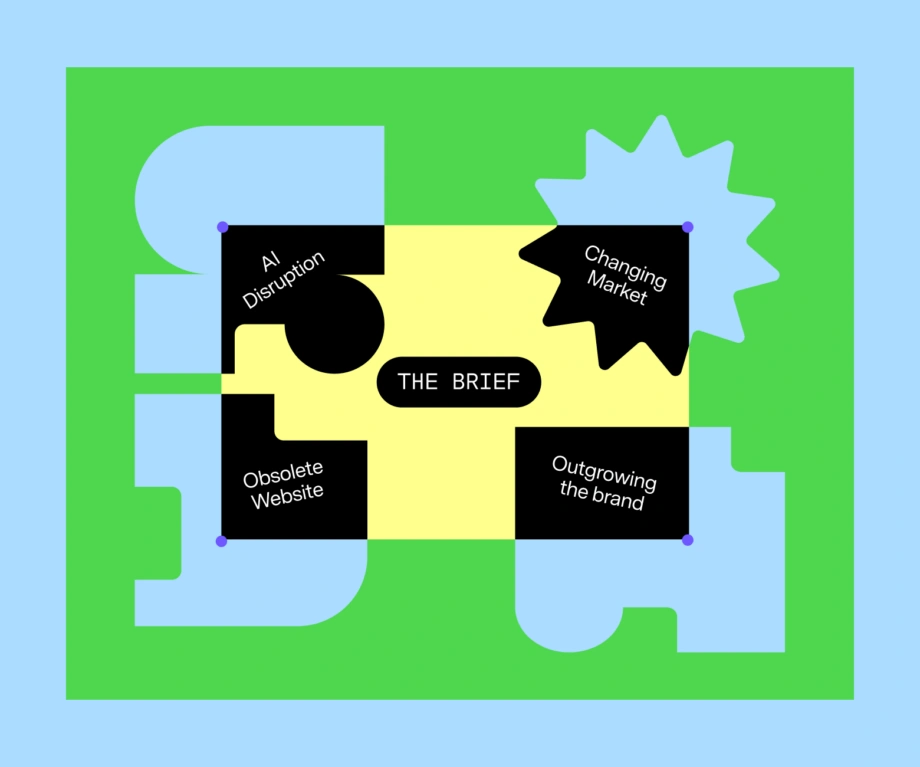
There’s a difference. “We need a new website” is a deliverable. “Our market position is under threat and our digital presence no longer reflects what we’ve become” is a situation. The first tells an agency what to build. The second tells them what to solve.
Most briefs are written at the deliverable level. Which means a 40k proposal and a 200k proposal aren’t competing for the same job. They’re describing two different solutions to two different situations they’ve each read into the same document.

What happens when the proposals land
The range creates immediate anxiety. 40k to 200k for the same brief doesn’t feel like a market. It feels like someone is either trying to take advantage or completely underestimating the work.
The expensive proposal stops feeling like an answer and starts feeling like a threat. The number becomes the story and everything behind it stops mattering.
The affordable one gets read differently. More generously. You find the parts that work. You quietly adjust what you actually need, not dramatically, just enough. Simple is smarter. Plenty of successful companies started lean and figured the rest out later. Every rationalisation feels reasonable because in isolation, each one is.
More often than not, by the time the contract is signed, the decision has shifted. It’s less about which proposal best addresses the situation and more about which number is easiest to defend if someone later asks why.
The brief that started as a tool for finding the right solution can become a tool for justifying the comfortable one.
None of this is irrational. It’s deeply human. A wide range creates anxiety. Anxiety looks for safety. Safety looks like the number that doesn’t feel like a risk.

The cost of that decision
The bias doesn’t stay in the selection process. It follows the project.
When the work lands and it’s fine but not quite what was needed, the price becomes the justification. “For that price, this is actually pretty good.” The expectations that quietly dropped during selection never fully come back up.
Six months later the original problem is still there. And now there’s a project on the books that cost something, produced something, and fixed nothing. The next time someone raises the same issue internally, someone else will say: we tried that. That’s the compound cost. Not just the money. The credibility of the initiative and the appetite to try again.
“What we’ve seen, across enough of these situations, is that the brief rarely fails because the agencies were wrong. It fails because the situation was never named clearly enough for anyone to respond to it properly. When strategy, identity, and digital are treated as separate line items rather than a connected system, each one gets scoped in isolation. And work scoped in isolation solves an isolated problem, not the actual one.”
Dario Sarnella
Client Relationship ManageR AT AFTERNOW
The real cost isn’t the invoice. It’s the next brief you’ll have to write for the same problem.
—
This is part one of two. Part two, Before the brief, looks at the situations behind a brief and what changes when they get named first. Coming soon.