A client once asked me how much of my job I thought AI would take over in a year. She wasn’t being pointed about it, she was genuinely curious, and building her own AI tools on her side of the business. It’s a question that we’d been circling.
A lot of what a project manager used to do should honestly be handed to a machine, and on our team it now is. The trouble is knowing where to stop. The instinct is to automate everything you can, but that instinct does not discriminate between the work that is safe to hand over and the work you are actually paying for.
The tedious project management layer is gone, and that’s okay
So, over a year after that conversation, which parts of my job did I concede to AI?
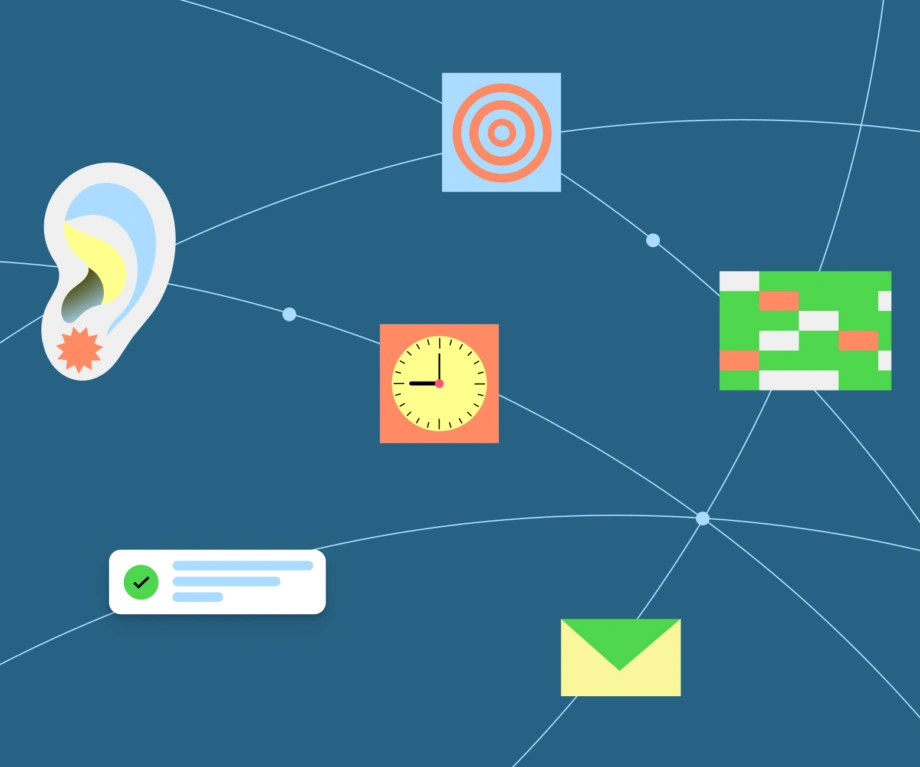
Today, the whole Afternow PM team runs a set of AI automation tools across the full life of a project, from first setup to closeout. They handle the tedious and repetitive work: the status roundups, the meeting notes, setting up a new project environment and closing it down when the work is done.
It is the part of the job anyone could do, and increasingly the part nobody has to.
We give it tasks that need no creativity, where the stakes are low and a wrong detail or two does no real harm and is easy to fix. The work we automated is essential for projects to run well, but is ultimately invisible to our clients.
What that clears our time for is the harder part.
The brief said one thing. A hotel lobby talk said another.
When I was starting out as a project manager, we had a client who wanted their new website to feel premium. They knew what they wanted, but they could not put it into words, and the brief and their comments in the room kept pointing in different directions. During one of the revisions, while we were waiting for the rest of the team to join the call, we were chatting about our weekends. The client mentioned a fancy hotel they had stayed at. They raved about the lobby, and how it was mostly empty. Just stone, tastefully scattered furniture and decor, and a lot of breathing room. The sentence was, paraphrased: “It was mostly empty, and somehow that made it feel expensive.”
That turned out to be the answer that unlocked their whole website. For them, premium was about restraint and minimalism, and the answer did not come from a brief, but from a casual off-hand conversation. We removed unnecessary illustrations, reduced the copy, and let space do the work.
No tool correctly decides what you meant when your brief and your comments point in different directions. That kind of understanding comes from paying attention to a person, not a document.
Knowing when to say no
AI will say yes to almost anything if you let it. Adding friction to a project, when friction is what leads to a better outcome, is something the tools still find difficult.
I once worked on a heavily used public site where the client wanted their main interactive feature placed behind a path of information they felt everyone should see first. Their reasoning was sound, but most visitors already knew that information. They came for that one feature and little else, so putting a gate in front of it would only have slowed things down for the people the site was built to serve. We recommended a cleaner path, and the client agreed. Building it as first described would have worked. It just would not have served their visitors as well.
The specifics change. A fashionable design choice that will not age well, a corner that is not worth cutting, a direction that would stop fully serving the goal of the product. But the move is the same: being willing to say “we think there’s a better way,” when agreeing would have been easier.
“To push back well, you have to understand what is being asked and why, not just answer it. That depends on context no one writes down, and on knowing which moment calls for friction and which does not. It is more than a prompt can carry. For now, this is a call that we like to keep for our human team members.”
Katarina Jozic
Head of operations at afternow
Who pays the cost of automating judgment? The client.
When you automate the tedious work, you save time and nothing is lost. When you completely automate the human out of the process, you also save time, but the cost does not disappear. It moves onto the client’s side of the project, and the bill is usually invisible until much later.
Think about the hotel story. If that revision meeting had been run entirely by an AI, the meeting summary would have been accurate. It would have logged the three action items and moved on. The remark about the empty lobby was small talk, and small talk is exactly what a summary is built to discard. The tool would not have been wrong. It would simply have thrown away the one sentence that unlocked the project, and nobody would have known it was gone. You get a project that is fine, and a product that fits your brand a little less than it should.
So when we say we keep the judgment in human hands, we are not protecting our own hours. Even the tools we built for the tedious work are set up to pause and ask a person at the moments that matter, rather than decide on their own.
It is the difference between a project that is mechanically managed and one that is understood.